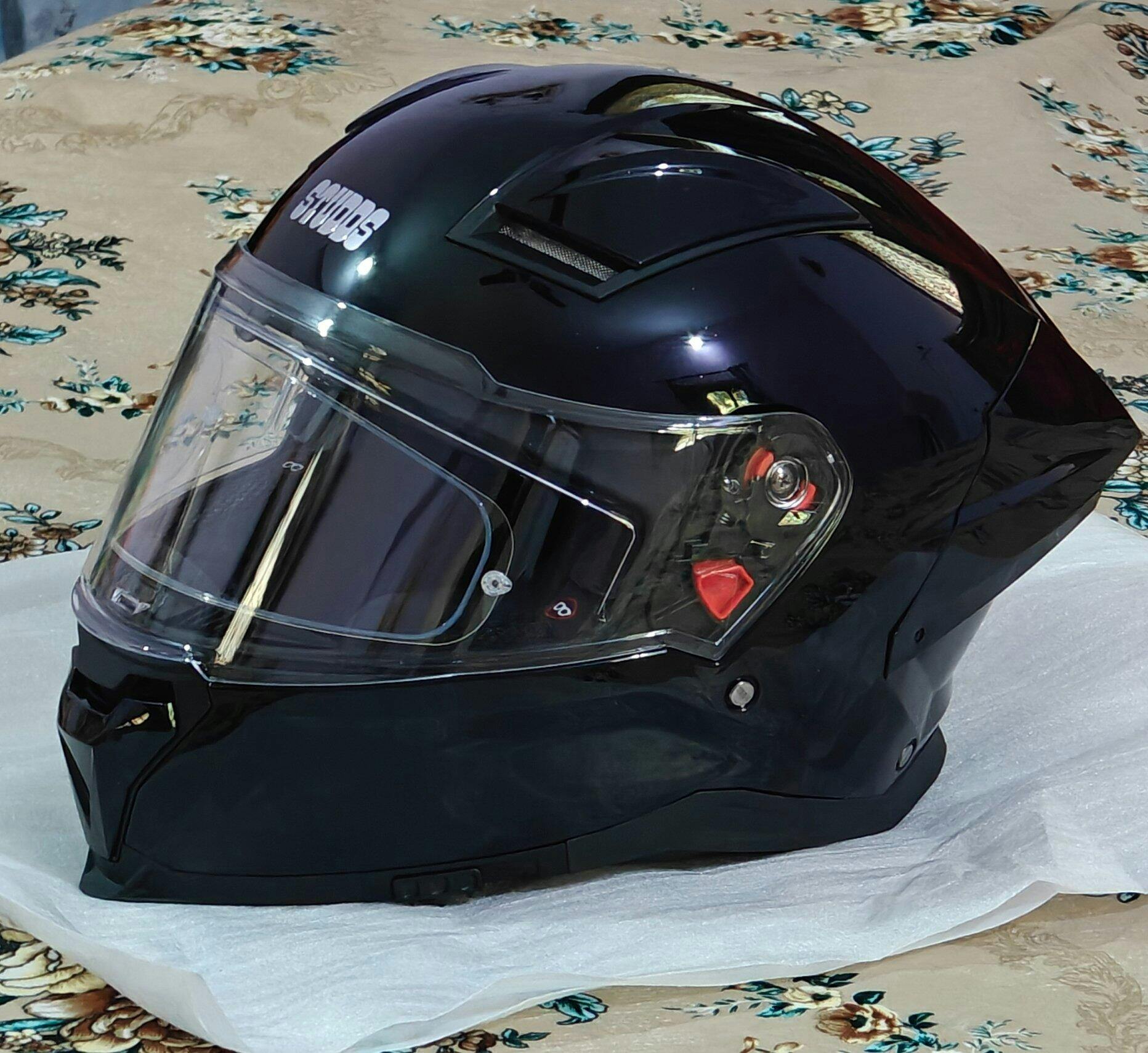
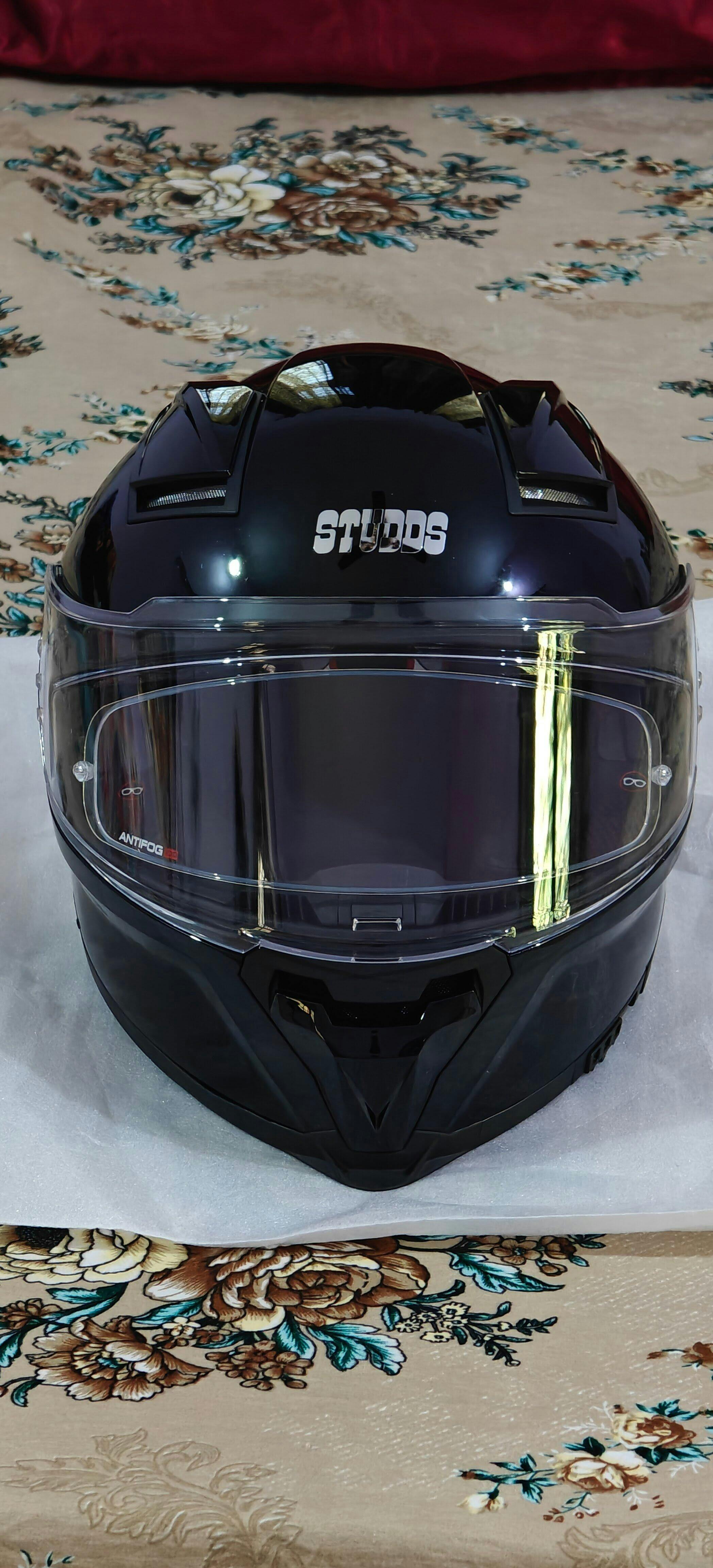
STUDDS Helios Asphalt Helmet

- Free Shipping Across India
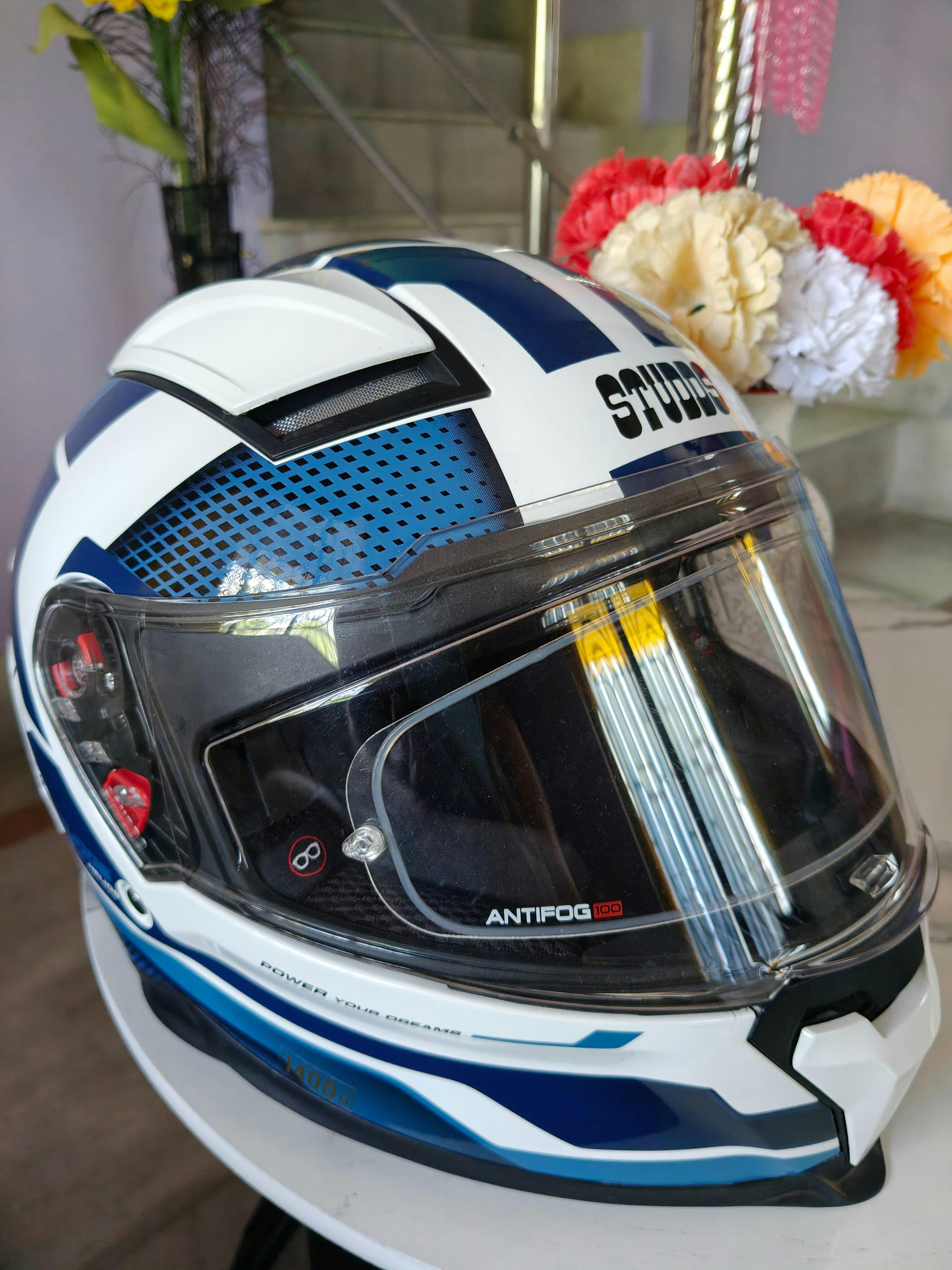
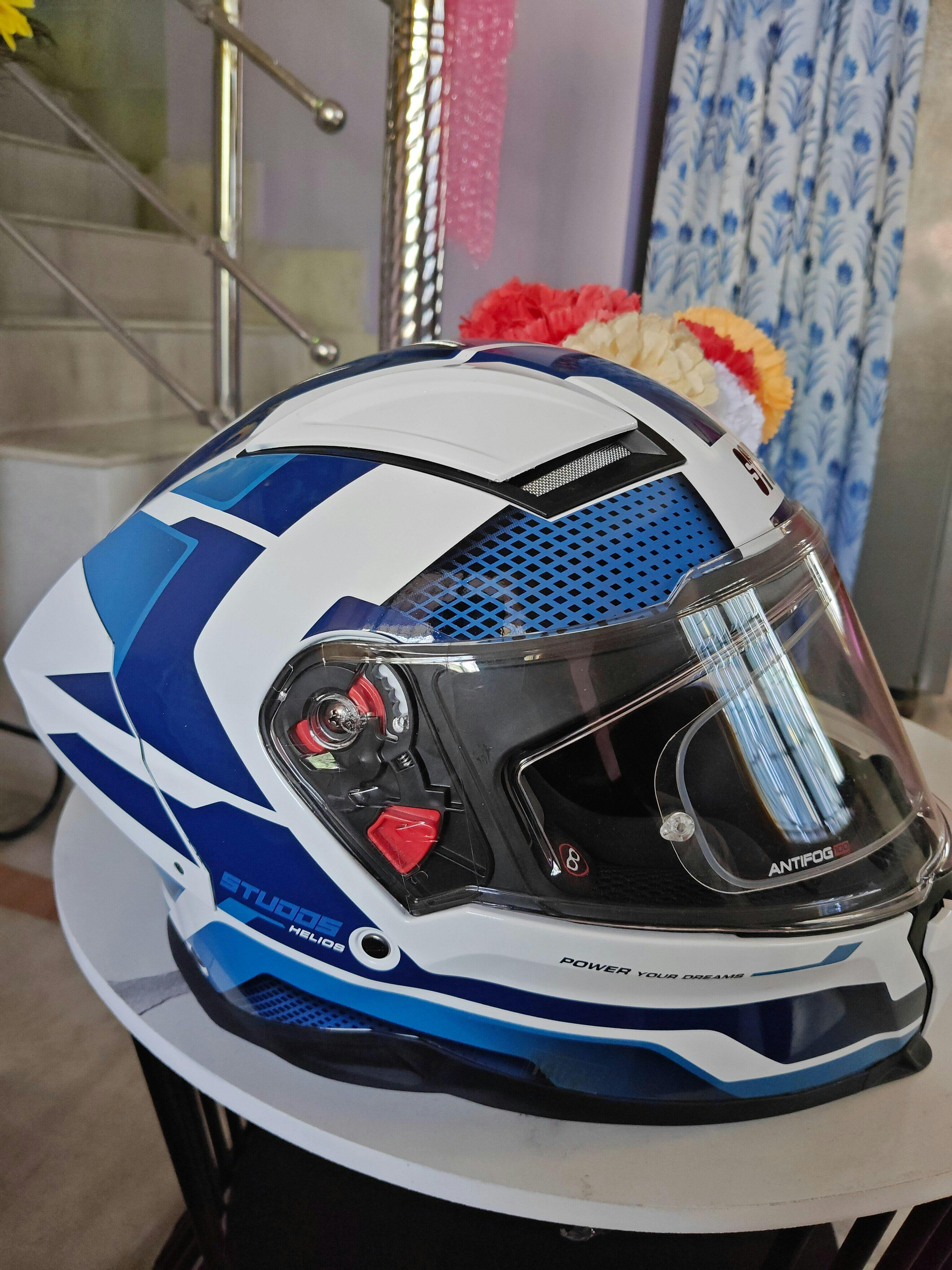
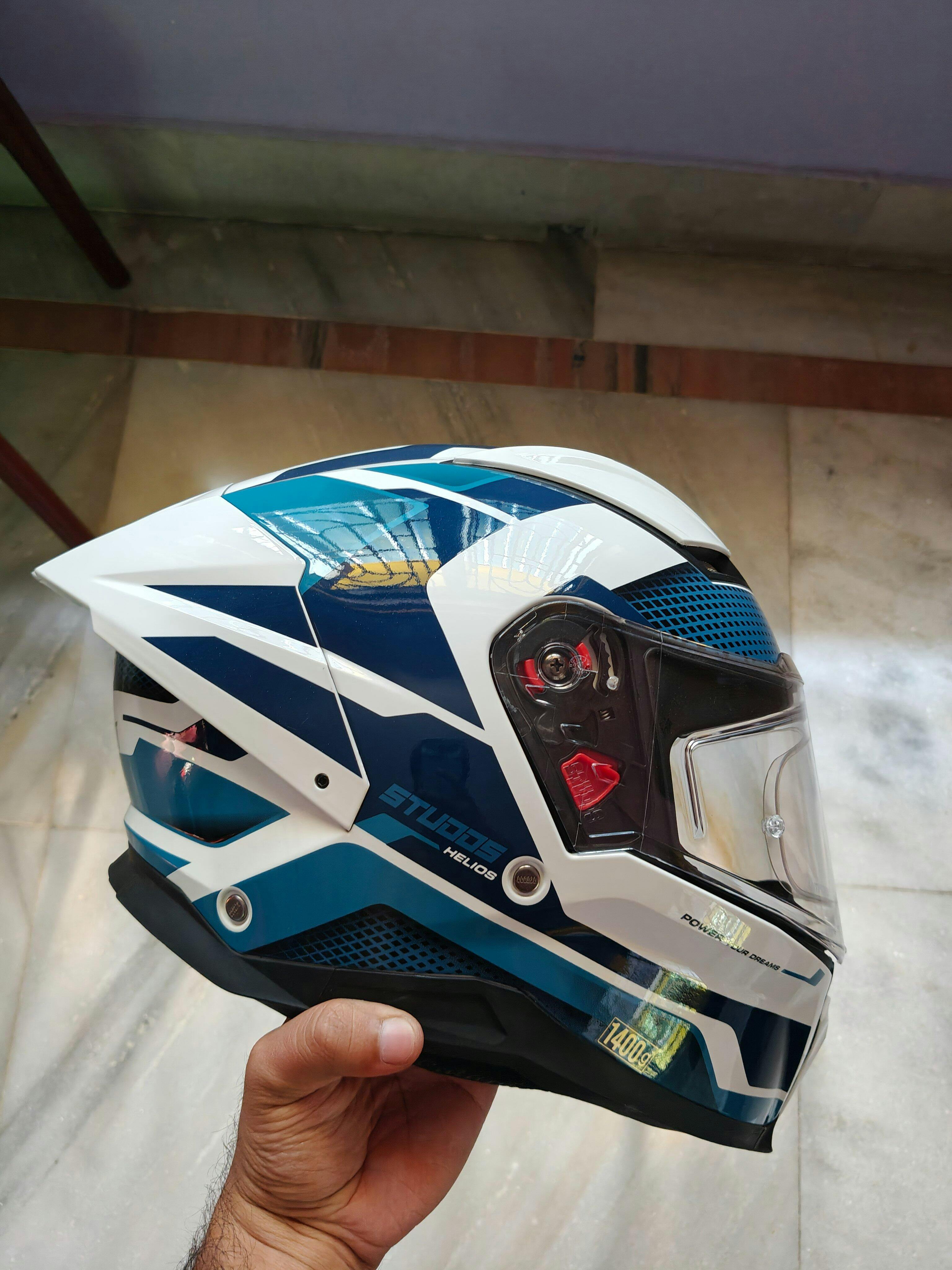
Experience the ultimate in helmet technology with the STUDDS Helios Asphalt Helmet. Made with a tough ABS shell and an aerodynamic spoiler, this lightweight helmet boasts an impressive Anti-fog 100 feature, providing 100 seconds of fog resistance.
Features:
Shell
- Constructed from high-impact ABS shell for weight and durability.
-
Aerodynamic shape with extended spoilers for reduced drag and stability at higher speeds.
Safety
- ISI 4151:2015 certified.
-
Micro-metric retention system for ease of use.
Ventilation
- 2 large top air vents for enhanced airflow.
- Large chin vent to direct cool air to the rider's face.
-
Rear exhaust to vent hot air from inside the helmet.
Visor
- Dual visor.
-
Scratch-resistant main clear visor.
- Anti-fog 100 pre-installed. 100 seconds of fog resistance which is 3 times the industry standard.
- Internal sun visor for those sunny rides.
- Easy-release visor system for quick changes.
Interior
-
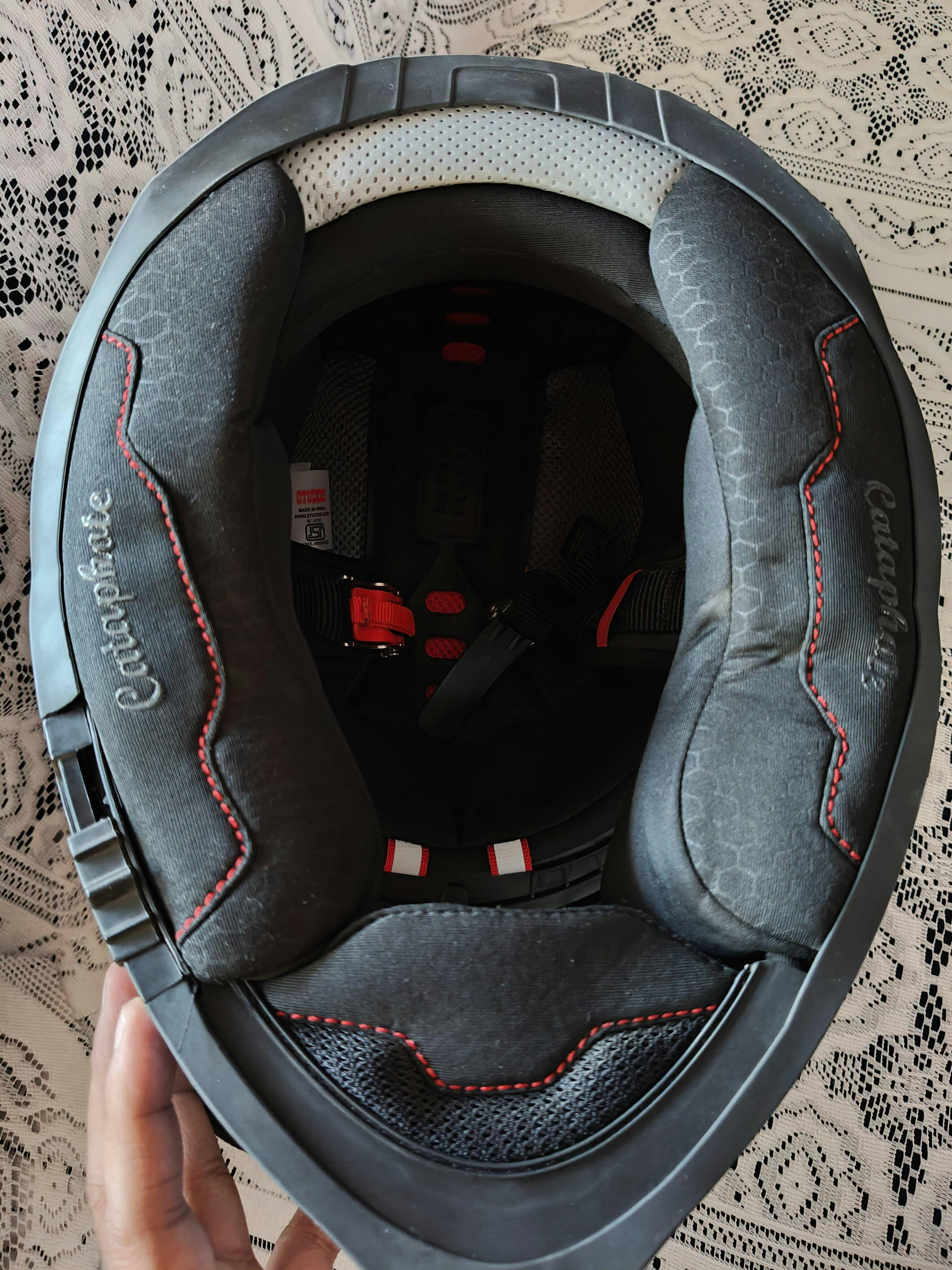
Spectacles-ready cheek pads (first in its category).
-
Easily Removable & washable liners made from wicking fabric.
Weight
-
Approximately 1400 (+/-50) grams offering lightweight, comfort and protection.
* This helmet is suitable for street use only and not suitable for racing.
* The color of the actual product may vary slightly from the images shown.
* Please note that the Anti-Fog insert is complimentary and it is not covered under warranty. Fitment of an Anti-Fog insert may cause contact with the visor seal by virtue of its proximity.
Daily care of a helmet is straightforward and essential. After riding, especially in hot and humid conditions, moisture accumulates inside the helmet. Place it in a well-ventilated area and leave the visor slightly open to allow airflow. Let it dry naturally. Avoid the common habit of hanging the helmet on the motorcycle’s rear-view mirror. Over time, uneven pressure from the mirror stem can create indentations in the EPS. Additionally, mirrors are exposed to dust and road grime that transfer directly into the interior liner. When storing the helmet indoors, avoid places that have prolonged exposure to direct sunlight. A cool, dry space is ideal.
Cleaning the helmet does not require aggressive products. For both the outer shell and the visor, clean water and a microfiber cloth are sufficient. Always wet the surface first to soften dust and prevent scratches caused by dry particles. Wipe gently with a clean microfiber cloth without excessive pressure. There is no need for petrol, thinner, industrial solvents, ammonia-based glass cleaners, or harsh chemical sprays. These can damage paint finishes, degrade visor coatings, and affect rubber seals.
Interior liner maintenance requires care and patience. If the helmet has removable padding, take it out gently and hand-wash it using mild detergent with room-temperature or lukewarm water. Do not wring or twist the padding aggressively. The internal foam can shift or deform, which alters fit. Instead, gently press out excess water and allow the padding to dry under a fan. Avoid direct heat sources. Padding behaves like a sponge and can take time to dry completely. Reinstalling damp liners can lead to odor, fungal growth, and premature breakdown.
The retention system, whether Double D-ring or micrometric, should be inspected periodically to ensure smooth operation and secure fastening. It is the mechanism that keeps the helmet firmly positioned on your head during impact. While it is built for durability, regular checks ensure it continues functioning as intended.
A motorcycle helmet is engineered to perform during one critical moment. Its ability to protect you depends on intact structural components, proper fit, and consistent care. Keep it clean, keep it dry, inspect it after drops, and maintain the internal liners properly. When treated as the safety equipment it truly is, a helmet remains ready to do the job it was designed for: protecting your head when it matters most.
PSI offers free domestic shipping on all orders. International shipping will be levied at actuals. Domestic buyers please note that your order will be shipped within 3 working days of orders placed through registered domestic courier companies or speed post only. PSI cannot be held responsible for any delivery delays caused by the courier company. PSI only guarantees to handover the order to the courier company or postal office within 3 working days from the date of the order.
PSI isn't liable if any damage is caused to the product during transit. Customers are advised not to accept the order if the package is damaged or has been tampered with.
Exchange Policy:
Your favorite gear purchased from us doesn't fit well? No problem, we are happy to exchange it for the right size.
- Please note that products purchased can be exchanged for size only. Product must be unused with all the tags and packing material must be intact. Products sent without proper packaging and without the helmet box and tags will be returned to the customer as is.
- Customer must fill the form below and then ship the product within 48hrs of receiving the product.
- Please ship the product to the address mentioned in the invoice received with the product.
- The cost of sending the product will be compensated to the customer in the form of store credit only at actuals but upto a maximum of Rs. 500. No cash compensation will be made.
- PSI will send the replacement free of cost.
* Please note that products that are on sale or purchased using a discount, luggage and all accessories cannot be exchanged.*
*The Store credit issued to the customer must be used within 30 days. The credit won't be reissued once it has expired.
*The Store credit can be used only on specific collections like helmets, jackets, gloves, pants, boots, intercoms and luggage. It cannot be used to buy accessories.
*The store credit for the shipping cost will be issued after the exchanged item is shipped. It is the customer's responsibility to send the shipping invoice to us within 7 days of the exchange to get the store credit. Store credit will not be issued if we do not get the shipping invoice within 7 days of the exchange.
Returns & Refund Policy:
Products once purchased can only be exchanged. They cannot be returned claiming for a refund. If the replacement product is not available in the requested size, customer must choose another model. If that is also not available, then a refund will be made only in the form of store credit which will be valid for 30 days only. Company will not make a cash refund under any circumstances.
Cancellation Policy:
We start processing the orders soon after receiving them. Hence, orders once placed cannot be cancelled.
To claim a warranty on STUDDS products, please contact them directly.